

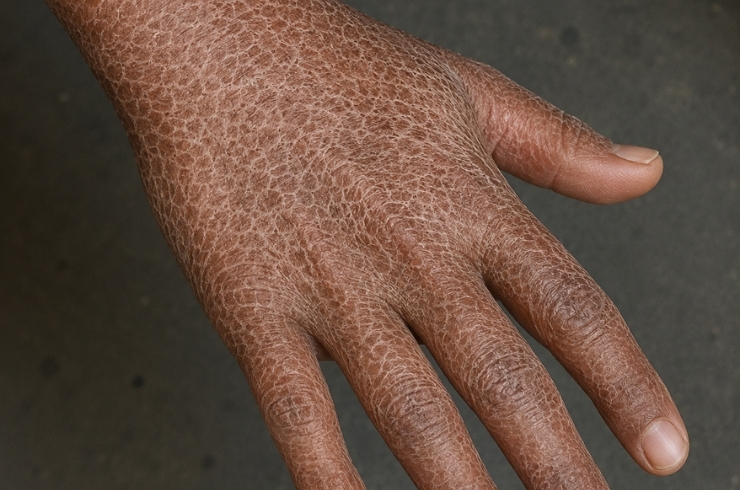
Ichthyosis refers to a group of inherited skin disorders characterized by dry, thickened, rough, and scaly skin. The name “ichthyosis” is derived from the Greek word for fish, as the scales that develop on the skin may resemble fish scales. There are more than 20 recognized forms of ichthyosis, varying in severity, appearance, and genetic cause.
The condition is usually present from birth or develops during early childhood, although certain forms can appear later in life. The severity of symptoms can range from mild skin dryness to widespread scaling and significant skin involvement.
Several forms of ichthyosis have been identified, including:
The most common type of ichthyosis, accounting for the majority of cases. It is usually characterized by dry, flaky skin and fine scales, particularly on the arms, legs, and trunk.
A genetic form that primarily affects males and typically causes larger, darker scales.
A rare inherited condition that presents at birth with redness, scaling, and widespread skin involvement.
A more severe form associated with blistering, thickened skin, and extensive scaling.
One of the rarest and most severe forms of ichthyosis, characterized by thick, plate-like scales present at birth.
A non-genetic form that may develop later in life and can be associated with certain medical conditions or medications.
Common symptoms include:
Dry skin
Thickened skin
Rough or flaky skin texture
Scaling resembling fish scales
Cracked skin
Itching and discomfort
Tightness of the skin
Increased sensitivity to environmental conditions
Symptoms often worsen during cold, dry weather and may improve in warm and humid climates.
Most forms of ichthyosis are caused by inherited genetic changes that affect the skin’s ability to shed dead skin cells normally. As a result, skin cells accumulate on the surface, leading to scaling and thickening.
The severity and appearance of the condition can vary significantly, even among individuals with the same genetic type.
Diagnosis is typically based on:
Medical and family history
Physical examination of the skin
Assessment of symptom patterns
Skin biopsy in selected cases
Genetic testing when necessary
Accurate diagnosis helps determine the specific type of ichthyosis and guide long-term management.
Proper skin care plays a crucial role in managing ichthyosis and improving comfort.
Use warm rather than hot water for bathing
Limit prolonged exposure to hot showers
Use gentle, fragrance-free cleansers
Avoid harsh soaps that may further dry the skin
Regular use of moisturizers helps improve skin hydration and reduce scaling. Moisturizers are often most effective when applied immediately after bathing while the skin is still slightly damp.
Avoid excessive rubbing of the skin after bathing
Pat the skin dry gently with a soft towel
Maintain adequate hydration
Protect the skin from extreme weather conditions
Many individuals with ichthyosis experience improvement in symptoms in warm, humid climates, while cold and dry environments may worsen skin dryness and scaling.
Although there is currently no permanent cure for most inherited forms of ichthyosis, treatment focuses on improving skin hydration, reducing scaling, relieving discomfort, and maintaining skin health.
Management may include:
Regular moisturizing therapy
Keratolytic agents prescribed by healthcare professionals
Specialized skin care routines
Treatment of secondary skin infections if present
Ongoing dermatological monitoring
Some individuals choose complementary therapies such as homeopathy as part of their overall wellness approach. However, homeopathy should not replace evidence-based dermatological care or medical management. A personalized treatment plan developed with a qualified healthcare professional is essential for effective long-term care.
With consistent skin care, regular medical follow-up, and appropriate management strategies, many individuals with ichthyosis can successfully control symptoms and maintain a good quality of life.